Making risk actionable
Connecting assessments, issues and exceptions to decisions, accountable owners and evidence—so governance informs how work gets done.
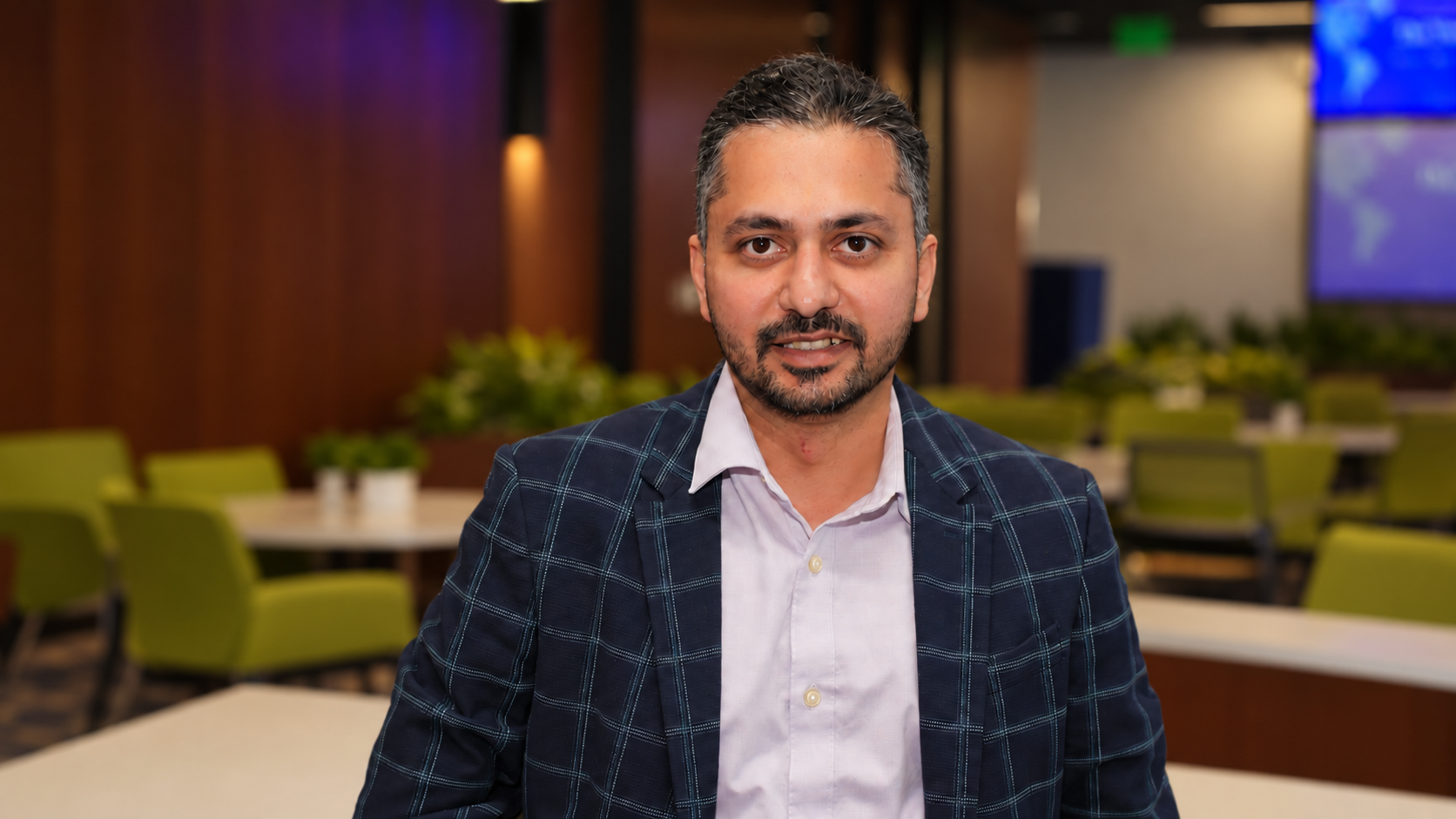
About Vijay Ravi
My work follows a security problem through the whole cycle: understanding the exposure, choosing a response, organizing delivery and checking that the result holds up. AI is opening new possibilities at each step.
A security issue rarely stays within one discipline. An identity weakness can become an incident. A vulnerability can become a business interruption. An exception that looks reasonable in isolation can expose a larger gap in how risk is understood and managed.
My work has centered on connecting those pieces: translating broad security requirements into operating practices, helping teams prioritize meaningful exposures, and bringing clarity to decisions that cross identity, privacy, incident response and governance.
That means looking at more than whether a control exists. I ask whether it addresses the problem, whether someone owns it, and whether the organization can tell when it stops working. A strong design needs people and processes capable of carrying it into daily operations.
Where I spend my effort
Connecting assessments, issues and exceptions to decisions, accountable owners and evidence—so governance informs how work gets done.
Bringing identity, exposure and incident workflows together so teams can move from identifying a problem to resolving it and verifying the result.
Aligning distributed teams around clear responsibilities and operating practices, while keeping technical choices connected to business outcomes.
I am exploring how AI can reduce the friction in security and risk work: triaging incidents and exceptions, finding relevant evidence, and helping practitioners make better-informed decisions. The goal is to improve the workflow as a whole, including the judgment and accountability around it.
At the same time, AI systems introduce a different set of security questions. When a system can retrieve sensitive information, choose a tool or trigger a business action, its permissions and operating boundaries become central to its safety.
My focus is the connection between those two challenges: using AI to strengthen cybersecurity while building the controls needed to secure AI itself. That spans agentic security, AI assurance and red teaming, security operations, exposure management and enterprise governance.
I bring a technical systems perspective together with an understanding of how organizations assess risk and deliver change. Architecture, controls and operating models need to reinforce each other.
What I check before calling it done
Understand what an action can affect before deciding what autonomy, access or oversight it should receive.
Every consequential workflow needs someone accountable for its controls, decisions and response when it fails.
Build around the people who must monitor, challenge, interrupt and recover the system.
Evidence should help a practitioner act and a leader understand—not simply satisfy a reporting requirement.
Beyond the enterprise
My talk with the ISC2 San Diego chapter explored how AI can move GRC from manual compliance toward continuous assurance. Sharing perspectives with practitioners keeps me engaged with the questions they face. Explaining an idea to people who must apply it is a useful test of whether it holds up.
My involvement includes serving as a jury member at The Ventures Startup Award in Austin in April 2026 and mentoring through the Dallas Entrepreneur Center. These conversations offer another lens on emerging technology: the problem being solved, the assumptions behind it, and what it takes to make an idea useful.
Why I write
I write to work through the details: a risky agent action, an evidence bottleneck, or a control that looks good on paper but needs a better operating model. These notes turn that thinking into explanations practitioners can use and challenge.